
Kishan P
September 25, 2026
Moodle supports online learning. This open-source LMS gives businesses and institutions a practical way to deliver online learning. But installation is just one step. The final cost can change based on features, from custom design and integrations to hosting and ongoing support.
The requirements make the difference. A basic Moodle setup may need limited customization, while advanced platforms can require extensive development and multiple integrations. Complexity also affects the budget. Understanding these factors early makes it easier to estimate the investment and plan the development approach. Looking at these factors early can help you estimate the budget before development begins.
This guide looks at what goes into Moodle development costs and how each factor can affect the budget. It also covers development approaches, additional expenses, timelines, and ways to plan the project more effectively.
How Much Does It Cost to Develop a Moodle Platform?
Moodle development costs vary by project. The final amount depends on the features, design, integrations, user volume, and development work involved. Here’s a general cost range to help with initial budget planning:
| Moodle Development Approach | Approximate Cost Range | Typical Scope |
|---|---|---|
| Basic Moodle Setup | $2,000-$5,000 | Installation, basic branding, and standard LMS features. |
| Customized Moodle Platform | $5,000-$15,000 and more | Custom UI/UX, plugins, and tailored workflows. |
| Enterprise Moodle Development | $15,000-$50,000 and more | Advanced functionality and complex integrations, |
These figures are only estimates. The final cost varies as each project brings its own development needs and associated expenses.
Basic Moodle Setup
Start with the essentials. A basic Moodle setup covers all standard features, from installation to reports. Custom work is limited. Since most requirements can be handled with existing Moodle functionality, development takes less time and usually costs less.
Customized Moodle Platform
Go beyond the standard setup. A customized Moodle platform can include tailored interfaces, dashboards, course workflows, user roles, reports, and business-specific features. More customization means more development work. The Moodle development cost increases as new features require additional development, testing, integrations, plugins, or modifications.
Enterprise Moodle Development
Enterprise Moodle projects handle greater demands. They support large user bases, multiple departments, complex learning operations, and workflows that need more specialized functionality. The scope is broader. Advanced integrations, scalability planning, security, reporting, and extensive customization can increase the Moodle platform development cost, while early architecture decisions can also affect future maintenance.
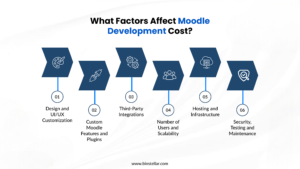
What Factors Affect Moodle Development Cost?
Know what the platform needs first. It gives you a clearer cost estimate and reduces the chances of unexpected work later. Look at these key factors:
Design and UI/UX Customization
Design changes can affect the budget. Basic branding usually needs only a few adjustments, while custom layouts, dashboards, navigation, responsive screens, and role-based interfaces require more development work. More detailed designs take longer. They also add to implementation and testing, especially when different experiences are needed for learners, instructors, and administrators.
Custom Moodle Features and Plugins
Moodle already covers many common learning needs. Some organisations, however, need custom assessments, dashboards, enrollment rules, automated workflows, reports, or learning processes that standard features cannot fully handle. That adds development work. Custom Moodle development services help adapt the platform to these requirements without disrupting the way your teams already manage learning and operations.
Third-Party Integrations
Integrations can add to the development work. Moodle may need to connect with payment gateways, CRM systems, HR platforms, video conferencing tools, identity providers, analytics systems, and other applications. Each connection needs technical work. API configuration, data mapping, authentication, error handling, and testing can all add to the Moodle development pricing as integration requirements grow.
Number of Users and Scalability
User volume affects the platform requirements. A Moodle site serving thousands of learners may need more infrastructure than one built for a smaller training organisation. More users can mean more work. Infrastructure setup, caching, monitoring, load handling, and performance testing may all increase development effort as the platform grows.
Hosting and Infrastructure
Hosting is another project cost. This shows that beyond development, you may need to budget for servers, storage, and other infrastructure requirements. Infrastructure needs vary. User volume, traffic, data, performance, and availability requirements should guide the setup rather than choosing an option based only on its initial price.
Security, Testing and Maintenance
Plan security and testing early. Testing can cover permissions, authentication, and other functions that need to work correctly before launch. The work continues after launch. From plugin updates to bug resolution and technical support, all add to the long-term cost of Moodle LMS development services.
How Long Does It Take to Develop a Moodle Platform?
Moodle projects can take different amounts of time. A basic implementation may be completed in around 2 to 4 weeks. Meanwhile, a customized platform can take 1 to 3 months based on the features involved. Larger projects take longer. Enterprise-level Moodle platforms can extend across several months when they involve extensive customization, multiple integrations, complex workflows, and detailed testing.
Custom features usually add development time. If a requirement cannot be handled through Moodle’s existing configuration and needs to be designed and developed from scratch, the team has more work to complete. External integrations can extend the schedule as well, since each one needs to be configured, connected, tested, and validated.
The timeline becomes clearer once the requirements are settled. From user roles and design requirements to testing needs, all should be defined before the development schedule is finalized.
How Can You Plan Your Moodle Development Budget?
A clear scope makes Moodle development pricing easier to estimate and manage. Businesses can follow a few practical steps before approaching a development team.
Define the type of Moodle platform you need
Start by defining your Moodle needs. Choose between a basic learning environment, a customized platform, or an enterprise solution with advanced requirements.
Separate standard Moodle functionality from custom requirements
List the features Moodle already provides and identify the capabilities that need customization or new development.
Identify integrations and specialized workflows
Document the external systems, data exchanges, automated processes, payment requirements, reporting needs, and other workflows the platform must support.
Consider ongoing maintenance and future development
Plan for ongoing Moodle costs. Keep some budget aside for updates, security, support, performance improvements, and new features as the platform grows.
Request an estimate based on a clearly defined scope
A professional Moodle Development Company can provide a more meaningful estimate when the required features, integrations, users, and technical expectations are clearly documented.
Conclusion
Moodle costs vary from project to project. A basic setup may need limited development, while custom features, integrations, security, scalability, and ongoing maintenance can increase the overall investment. The requirements shape the budget. Defining the expected features, users, integrations, and future plans early gives you a clearer idea of the work involved. That makes budgeting easier. It also helps you choose a development approach that can support your learning platform as its needs change.
Planning to build a customized Moodle platform? Then, partner with a reliable Moodle development company like Binstellar. We build around your learning needs. Our team helps businesses plan, develop, and maintain Moodle platforms based on their workflows and unique project needs. Contact us today! Let’s discuss your requirements and get a development approach aligned with your business and learning goals.
Written by
Kishan P